
The Appleseed Effect: How Harassment Hides in Plain Sight
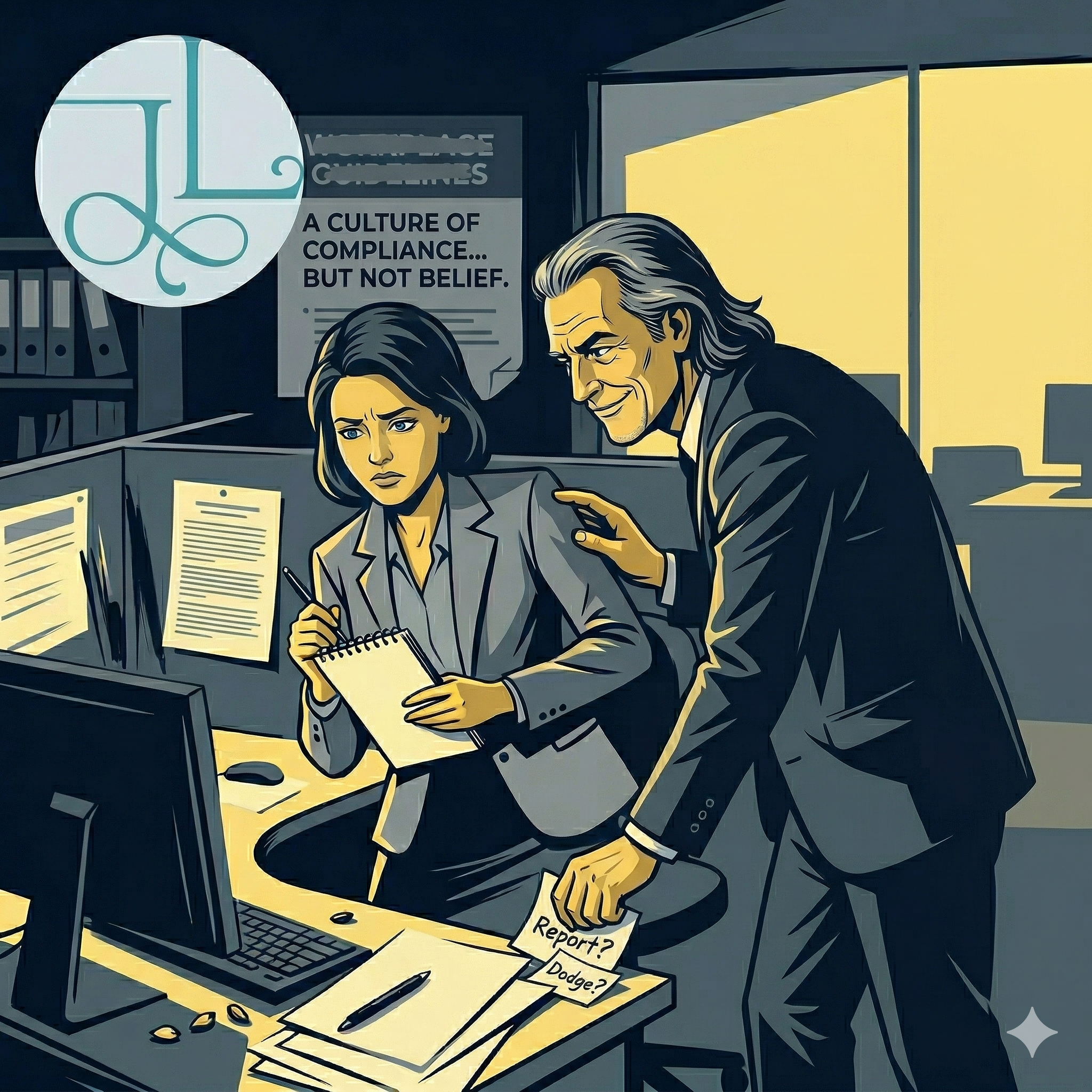
Image for illustration purposes only
Sage Avocado
My work teaches me to be trauma-informed. I often hear about childhood trauma, which frequently triggers memories of my own experiences of abuse by a family member. When comparing notes with my female friends, I heard similar stories about "an uncle" or "a dad’s friend" who treated them as something other than a child. I had hoped such cases would be reported more quickly in the U.S., and perhaps that there would be stronger workplace protections for women.
I want to share a story about a corporation where many of the top executives come from law enforcement backgrounds. I will call my former boss "Appleseed." I am inspired by Chanel Miller’s "apple seed" concept: the idea that swallowing one or two apple seeds won't harm you instantly, but if a person or animal consumes enough of them over time, they can become sick because the seeds contain a chemical that produces cyanide.
Appleseed was an older white man with long hair and a clean-shaven, almost handsome face. Our interactions began with a slightly flirtatious tone; he would say things like, "You look really nice in those green pants." I would simply say thank you and try to steer the conversation back to work. I loved my job and was proud of my accomplishments. I was managing a program entirely on my own, even though it wasn't officially part of my job description.
One day, Appleseed walked me directly into a women’s restroom, claiming he wanted to show me where we needed to install an extra cupboard for supplies. He loved to chat with me about the world. If you’re wondering why I didn't simply tell him to maintain professional boundaries, it's because he was my supervisor and had years of experience in law enforcement.
Appleseed told me his daughter had dark eyes like mine. He seemed to want to be "friends," oversharing personal details about his life and things he could no longer do. He even found me a "mentor"—his own wife. I was old enough to know this was unprofessional. Eventually, he told me directly that he liked talking to me about various things, but work was not one of them.
The worst day was when I was in the office alone and he called to say he was coming in. I felt skeptical and uneasy about his intentions, so I asked a teammate to come to the office as well. I informed Appleseed that my teammate was there in case he wanted to meet with us; he immediately changed his mind about coming in and went home instead. I won’t bore you with the details of how often I had to dodge him. It wasn’t that he hadn't been trained; our company provides sexual harassment training for everyone.
“The worst day was when I was in the office alone and he called to say he was coming in. I felt skeptical and uneasy about his intentions, so I asked a teammate to come to the office as well. I informed Appleseed that my teammate was there in case he wanted to meet with us; he immediately changed his mind about coming in and went home instead. ”
I got the impression that it was still considered "normal" for men to have a "little fun" in the workplace. I knew these behaviors were hard to pinpoint or document. As a result, I had to endure more than two hours of non-work-related "mentoring." Eventually, he stopped coming to the office and chose to work virtually, which meant he was unresponsive during crises—and in my field, crises requiring quick decisions are common. Yet, he still found time to promote a case manager without an interview—a young mother who also wanted to work virtually. But I’ll spare you those details.
After much workplace drama and many near-misses, he decided to retire for a second time. I eventually got a new supervisor who was not male. I’ve heard from friends that this scenario is common and that women have become experts at navigating it tactfully. This story will continue to be told until reporting becomes easy, and women are afforded the same honor of being believed as men.
The views expressed in this article are those of the author and do not necessarily reflect the views of Juxtapose.life or its affiliates
