
When Girls’ Bodies Become “Evidence”: What Shahapur Reveals About Everyday Bias
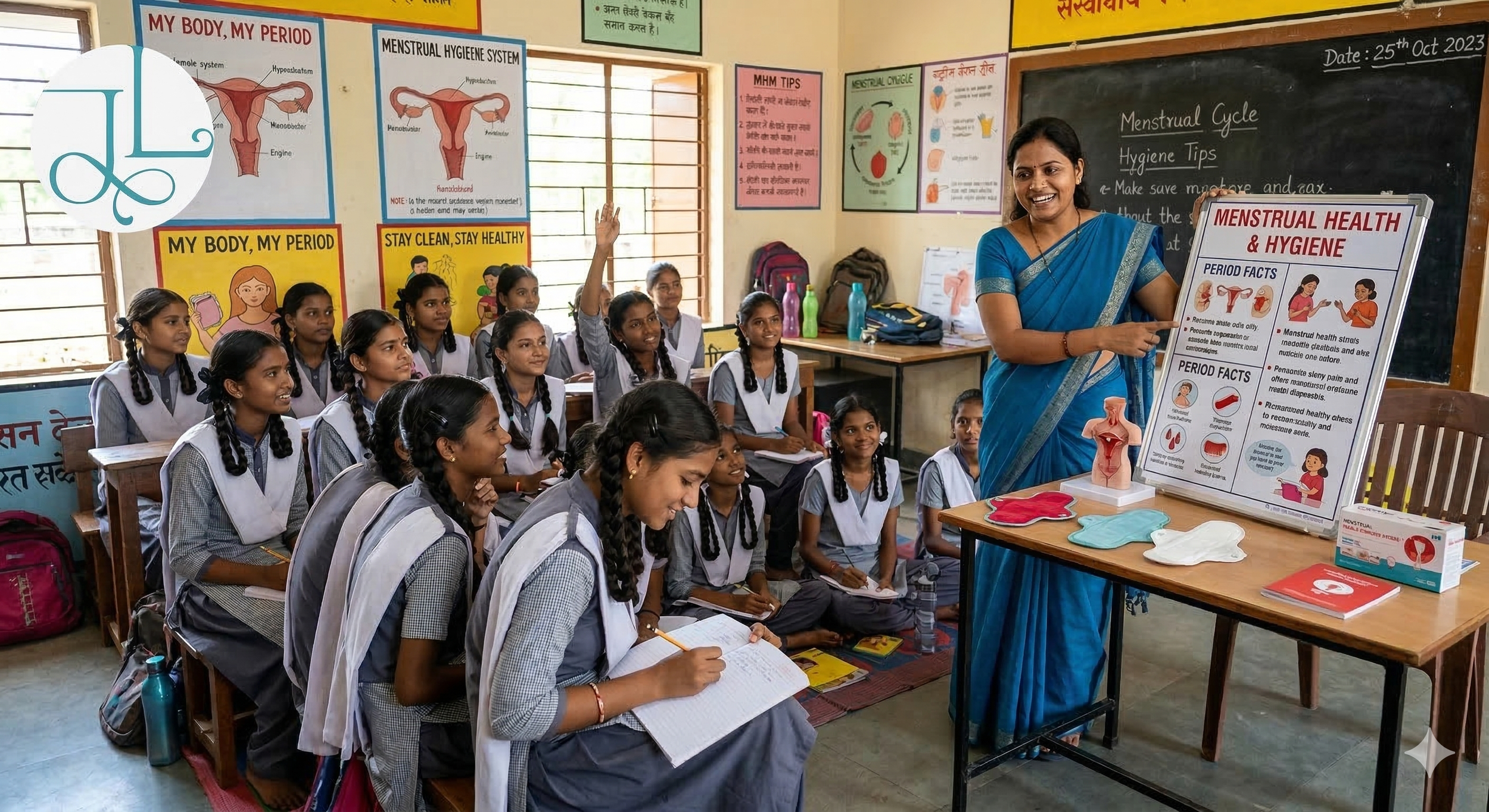
Image for illustration purposes only
Dr. Aishwarya Revadkar
The recent incident involving schoolgirls in Shahapur, in Thane district, is deeply disturbing. What shocks us is not only that it happened in a district close to Mumbai, but that even in 2025, girls’ bodies are still viewed through such regressive and harmful attitudes.
The incident began when blood stains were found in a school bathroom. Instead of treating this as something entirely normal, the school administration created panic and proceeded to strip and physically inspect the girls. This response exposes two troubling realities. First, the deep stigma that still surrounds menstruation. Second, the disturbing assumption that institutions have the authority to control and examine girls’ bodies.
Schools are meant to be safe spaces for children. When the very institution responsible for safety abuses its power, violates bodily autonomy, and humiliates young girls, it raises serious questions about the systems meant to protect them. The psychological impact of such an experience on adolescents can be profound and long‑lasting.
Incidents like Shahapur challenge a common narrative we often hear—that society has progressed and that menstruation is no longer treated as impure. Another widespread belief is that such “backward thinking” exists only in rural or uneducated communities. According to this view, menstrual awareness campaigns are mainly needed in villages, while urban and educated populations have already moved past such attitudes.
But reality repeatedly tells a different story.
Bias against women’s bodies does not disappear with education, urbanization, or economic development. Instead, it often changes form and continues to operate quietly through institutions, everyday practices, and social norms.
If we are to address such problems, the first step is acknowledging that they exist. Once we accept the presence of bias and discrimination, dialogue becomes possible. But when society refuses to even recognize the problem, meaningful conversation becomes difficult.
Among sections of the educated class, a new pattern is emerging: social evils are acknowledged superficially, but their harmful consequences are downplayed. For instance, menstrual seclusion is sometimes justified by saying that women are asked to sit separately simply so they can rest. While this explanation sounds comforting, it ignores the realities of stigma, exclusion, and harm that many women experience.
In some Adivasi regions, for example, there is a practice known as the “Kurma ghar.” During menstruation, women are sent to stay in small huts near the house, often in extremely poor conditions. In 2011, the organization Sparsh in Gadchiroli surveyed 233 such huts and found that 28 girls had died because of snake bites, attacks by wild animals, or lack of medical care while staying there. Many of those who died were adolescent girls and young women.
“Bias against women’s bodies does not disappear with education, urbanization, or economic development. Instead, it often changes form and continues to operate quietly through institutions, everyday practices, and social norms.”
Sparsh later conducted further studies and submitted a report to the district administration demanding action. The organization continues to work with Adivasi women, and through another initiative, Samajbandh, awareness programs about menstruation and the Kurma ghar practice are being conducted in tribal communities.
These efforts are important and encouraging. Yet they reach only a fraction of those affected. Across the country, many girls and women continue to face stigma, silence, and misinformation about menstruation and reproductive health.
At the same time, when incidents like Shahapur occur in urban areas—places where people have access to the internet, education, and modern services—it forces us to ask difficult questions. If bias persists even in such settings, then the problem clearly runs deeper than lack of information.
The issue is not limited to menstruation alone. It reflects a broader pattern of how women’s bodies are viewed and controlled within society.
The education system, which should empower young people with knowledge and dignity, sometimes reproduces the same biases it is meant to challenge. When schools become spaces where girls are shamed or humiliated, they reinforce harmful attitudes instead of dismantling them.
Similar patterns can be seen across other systems—politics, administration, healthcare, workplaces, and even the justice system. Violence against women’s bodies often becomes normalized to the point that incidents of rape, maternal deaths, or degrading public statements are absorbed into the everyday flow of news. We read about them briefly and then move on.
Healthcare, ideally, should be one of the safest spaces for women, because women approach it at moments of vulnerability. Yet healthcare systems too are shaped by social attitudes and market pressures. In both rural and urban settings, there is often silence and stigma around conditions such as PCOD or menopause. At the same time, fear and anxiety about women’s bodies are sometimes used to promote expensive treatments and procedures.
Blaming individual doctors alone does not capture the full picture. Healthcare professionals emerge from the same society and are influenced by its norms and biases. Government policies that encourage privatization can also intensify market pressures within the health sector. The rapid spread of IVF centers across towns and villages is one example. These centers involve significant financial investment and therefore depend on a steady flow of patients. In such contexts, fear of infertility can easily be amplified among women.
Addressing these issues requires more than isolated reforms. The conversation cannot remain limited to menstrual stigma alone. We must examine the broader structures that shape women’s experiences—educational, economic, political, cultural, and social.
Across India, the evidence is everywhere. From the death of a pregnant woman in Pune, to the hysterectomies performed on sugarcane‑cutting women laborers in Beed; from brutal rape‑murders in cities like Kolkata and Delhi to caste‑based sexual violence in small villages—these incidents reveal how gender discrimination intersects with caste, class, and social power.
If we want meaningful change, we must listen more closely to women’s lived experiences and the everyday biases they encounter. Documenting these stories, understanding their systemic roots, and bringing them into public conversation is essential.
Because without confronting these realities, we risk becoming silent witnesses to the many ways in which society continues to control, exploit, and normalize injustice against women’s bodies.
The views expressed in this article are those of the author and do not necessarily reflect the views of Juxtapose.life or its affiliates

Dr. Aishwarya Revadkar
Obstetrician-gynecologist from Maharashtra, feminist thinker and public speaker, Marathi writer with four books, and founder of Sukhstation, a social media platform for mental and sexual health awareness.
